What does it mean for an LLM to express an emotion, and can we separate surface expression, internal representation, and functional state without trusting self-reports?

It is important to understand what it means for an LLM to express an emotion because self-reporting is the easiest place for us to understand a model. However it is also the most prone to failure. In order to solve this problem, we need to be able to have a ground truth outside of the […]
Can it ever be rational for a utility-maximizing agent to change its own utility function?

Yes — if its model of reality is wrong. Classically, a rational agent with utility function U should never replace it with V, because if adopting V increased expected utility according to U, the agent could simply perform V’s actions without changing its goals. However, this assumes that the agent can evaluate alternatives accurately. Some […]
A Critique of Byrnes, “Empowerment, Corrigibility, etc. Are Simple Abstractions (of a Messed-Up Ontology)”
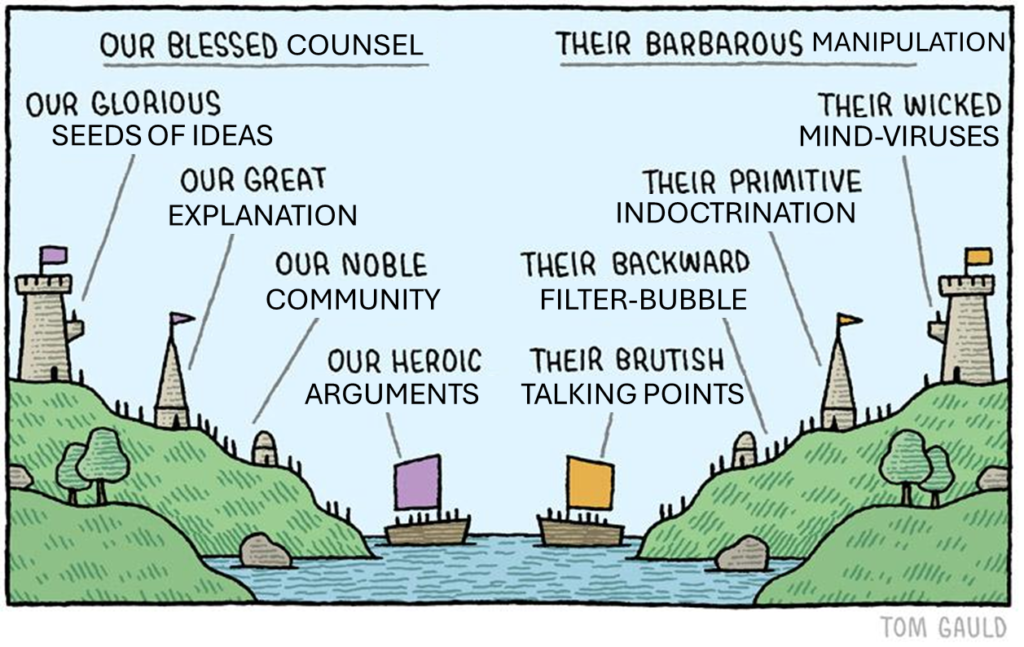
https://www.lesswrong.com/posts/vzHtHHBJoKATi5SeK/empowerment-corrigibility-etc-are-simple-abstractions-of-a Byrnes believes that agency and manipulation necessarily depend on a True Name with authentic desires. He then concedes, on the weight of scientific literature, that no such self exists and that these concepts cannot be rigorously defined. I agree with the diagnosis, but not the conclusion. Buddhist philosophy reached this same conclusion two and […]
A Critique of How Much Is Left? LLMs Linearly Encode Their Remaining Output Length
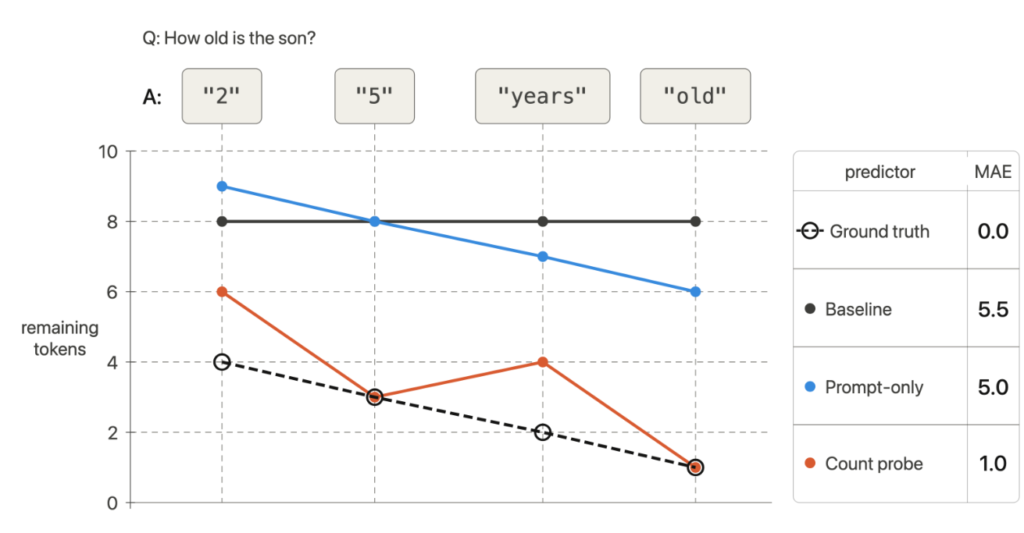
https://arxiv.org/abs/2607.05316 The authors took great care to separate decodability from causal use. However, their central contrast of a plan-like representation rather than a downstream regularity of decoding may not be exclusive. If the length signal rides on the geometry of the model’s representational trajectory, then it is both a real structure and a byproduct of […]
The Power of Human Interpretable AI for Homelessness

In the fight against chronic homelessness, London, Canada, has turned to an approach that combines artificial intelligence’s predictive power with a critical need for transparency and interpretability. The HIFIS-RNN-MLP model, developed by researchers to forecast chronic homelessness, is illustrative of making convoluted artificial neural networks trustworthy and easy to explain, precisely when dealing with sensitive […]
Data Scientists for Social Good: Brandon Skinner

A great example of data science for social good can be found within a partnership between Strategies to End Homelessness and 84.51°: an analytics and data science company located in Cincinnati that demonstrates ways in which data can be used to solve homelessness issues. STEH, a Cincinnati-based CoC organization, channels efforts to support homeless people […]
Housing for Homeless Youth

A new study suggests a creative approach to allocating scarce housing resources among homeless youth so that the process is fair and efficient. A group of researchers at the University of Southern California has developed a data-driven framework using artificial intelligence to design housing allocation policies that improve current practice. The challenges of the homeless […]
Text To Image

Text to Image models are an emerging field, exciting for marketers, and designers. They work by leveraging several models pieced together in an innovative manner, providing useful functionality.Initially, generative adversarial networks (GANs), are used to translate textual input into visual output. At the heart of text-to-image processing lies the ability to understand and interpret the […]
Pareto Efficiency

Pareto efficiency is named after the Italian economist Vilfredo Pareto. This principle offers a framework through which resource allocation can be understood and optimized. Pareto efficiency has found various applications in business strategy, public policy, and engineering. Pareto efficiency, simply put, is where a resource allocation cannot improve the situation of any individual or entity […]
Music and AI
In a groundbreaking collaboration, Google researchers partnered with Osaka University to delve into the intersection between music, AI, and neuroscience, yielding astonishing findings. Music I a fundamental aspect of human nature. Over decades, researchers have explored the relationship between music and the human brain, and revealed that dopamine releases peak during emotional climaxes in music. […]